
Specification lab · Factory Tire
Wheel alignment
Dial in camber, caster, and toe so your vehicle tracks straight and tires wear evenly—serving Toronto, Etobicoke, Rexdale, and neighbouring communities.
Description of Wheel Alignment
A wheel alignment consists of adjusting the wheels of your vehicle so that all wheels are parallel to each other and perpendicular to the ground. Three basic angles contribute to proper wheel alignment: camber, caster, and toe. Camber is the measure of the degree of perpendicular offset from the road surface. Caster is the angle of your wheel’s pivot, which is attached to the suspension, and when this angle is out of alignment, straight-line tracking is affected. Toe refers to the angle of directional difference between the tire and the centerline of the vehicle. The front and rear wheels on your vehicle should always be perpendicular to the ground and parallel to the tire beside it. Routine wheel alignments have the potential to save you money in the long run while promoting optimal vehicle performance.
Bay schedule · pick a lane
Times are approximateFour-wheel alignment typically needs more bay time than a two-wheel front alignment—your vehicle and equipment may vary.
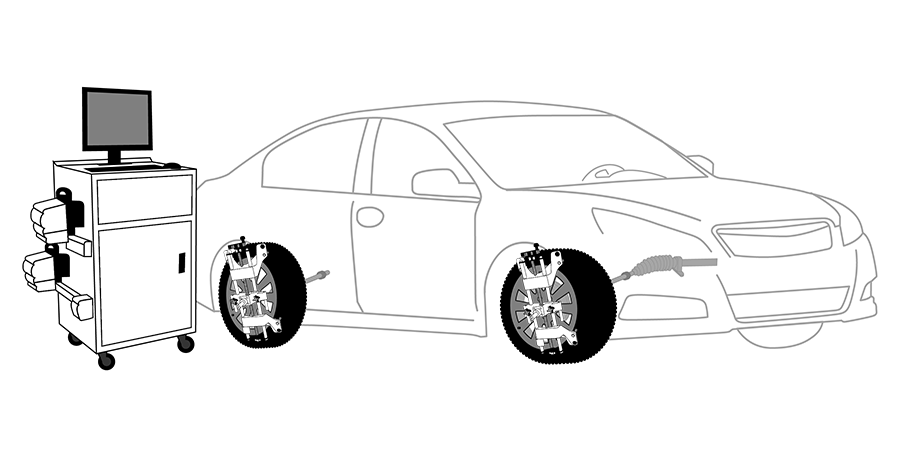
Four-Wheel Alignment
Wheel alignments help ensure your tires are angled correctly—level with the ground, pointing straight ahead, and parallel to each other—so every corner of the chassis agrees and tread wears evenly across the set.
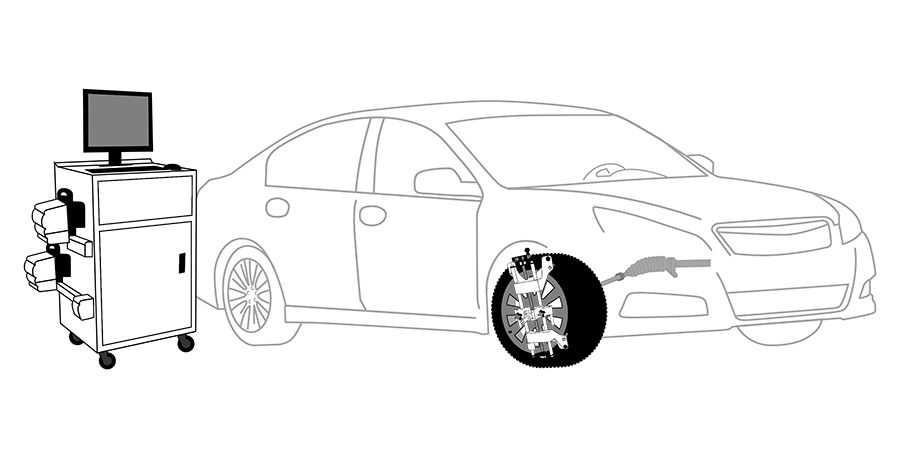
Two-Wheel Alignment
Wheel alignments are a particularly important step in overall tire and wheel maintenance. The purpose of a wheel alignment is to square the vehicle’s wheels and axles so it rolls true—when your vehicle calls for front-axle service, two-wheel alignment matches that workflow in less bay time.
Four-Wheel Alignment
The Basics Behind Four-Wheel Alignment Services at Factory Tire
Wheel alignments help ensure your tires are angled correctly—level with the ground, pointing straight ahead, and parallel to each other—so they can maintain straight-line tracking. Proper alignment angles will help you maximize the life of your tires. In addition, the handling of your vehicle will be considerably easier. Wheel alignments are arguably the most important aspect of wheel and tire maintenance. Three angles promote proper wheel alignment: toe, caster, and camber. Toe is the measurement between tires. Your tires should be in equal positions and parallel to each other. Caster, or the angle of the steering pivot, permits the wheels to turn along with the steering wheel. Camber is the angle of the wheel, which should be perpendicular to the ground. Four-wheel alignments are an important part of extending the life of your tires, because misaligned tires inevitably lead to poor tire performance and uneven tread wear.
Why Should You Have Four-Wheel Alignment Services Performed at Factory Tire?
Wheels out of alignment can cause difficulty with overall vehicle handling. A four-wheel alignment is often the best choice for many drivers, particularly those who have front-wheel drive. Wheels can become misaligned during a car crash or by simply hitting road obstructions, like potholes or curbs. There are several signs that will alert you to an impending four-wheel alignment service. A vehicle pulling strongly to one side is in need of alignment. Another sign is uneven or abnormal tire wear. Properly aligned wheels provide many benefits, including cutting down on fuel costs, because wheels that have been aligned properly offer considerably less rolling resistance. Routine wheel alignments also prevent disproportionate tire wear, so your tires will last longer. Contact us today for a four-wheel alignment.
We proudly service the Four-Wheel Alignment needs of customers in Toronto, ON, Etobicoke, ON, Rexdale, ON, and surrounding areas.
Areas served: Toronto, ON | Etobicoke, ON | Rexdale, ON | and surrounding areas
Two-Wheel Alignment
The Basics Behind Two-Wheel Alignment Services at Factory Tire
Wheel alignments are a particularly important step in overall tire and wheel maintenance. The purpose of a wheel alignment is to ensure your tires are pointing straight ahead, perpendicular to the ground, and parallel to each other so they roll at the right angle. Properly aligned tires will help you get the most out of your tires, and vehicle handling will feel considerably easier. When it comes to wheel alignment, three angles contribute to proper alignment: camber, caster, and toe. Camber is the angle of the wheel, which should be at 0° in order for the tire to be perpendicular to the ground and not cause uneven wear to the outer edges. Caster is the angle of the steering pivot, which allows the tires to turn with the steering wheel. Toe is the measurement between tires so that they are parallel to each other. Keeping all three angles in sync will provide for better performance.
Why Should You Have Two-Wheel Alignment Services Performed at Factory Tire?
Misaligned tires can cause uneven tire wear and difficulty with vehicle handling. A sign of an impending wheel alignment may be felt in the pulling of your vehicle’s steering wheel. Tires can be knocked out of alignment during a collision or by hitting other obstacles, like potholes or curbs. Wheel alignment is important because properly aligned wheels provide fuel saving benefits. This is because they receive less resistance from the surface of the road. A member of our team can inspect your vehicle to see whether a two-wheel alignment is the best option for your vehicle. Proper wheel alignment promotes even tread wear, which means your tires will last longer. Give us a call if you think a two-wheel alignment is right for you.
We proudly service the Two-Wheel Alignment needs of customers in Toronto, ON, Etobicoke, ON, Rexdale, ON, and surrounding areas.
Areas served: Toronto, ON | Etobicoke, ON | Rexdale, ON | and surrounding areas